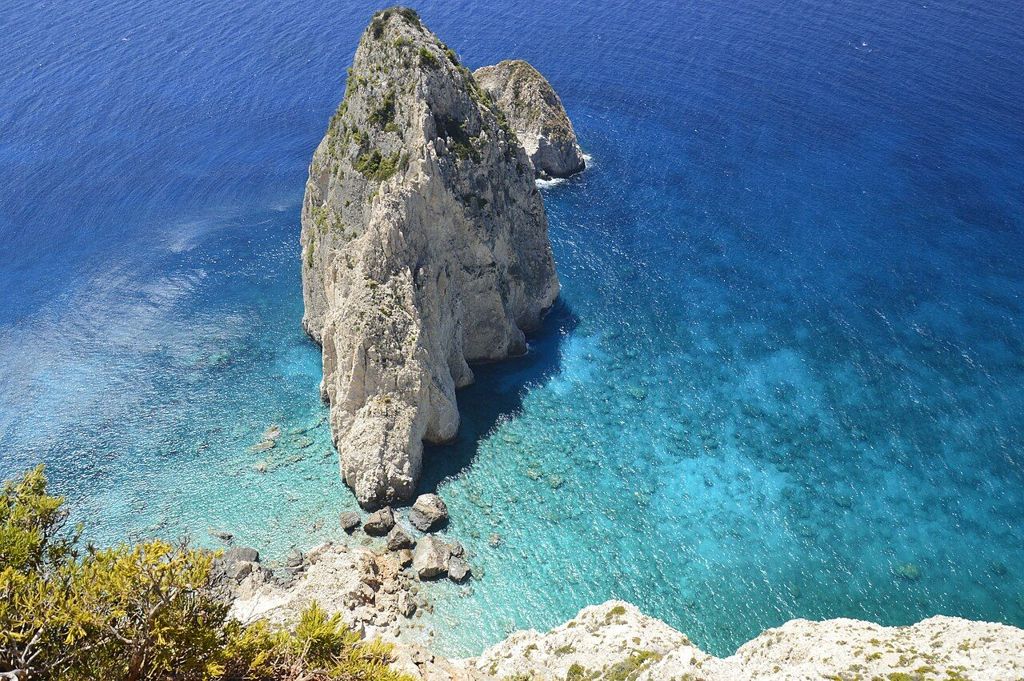
Keri's cliffs and lighthouse
The south-west cape of Zakynthos ends in high white cliffs, a lighthouse and two pale sea stacks rising from clear water. Come for the late light and the long drop to the sea.
| Best months | May, June, September, October |
|---|---|
| Getting there | Road west past Keri village to the cape |
| Bring | Sturdy shoes, water, warm layer for evening |
| Beach rule | Stay well back from the unfenced cliff edge, and keep boats slow inside the marine park waters below. |
Keri is the south-western corner of Zakynthos, where the gentle shores of Laganas Bay give way to high limestone cliffs that run north along the whole west coast. A small village sits inland on the slopes, a little harbour lies at Limni Keriou on the bay, and at the very end of the road a lighthouse stands on the cliff top above the open sea.
Below the lighthouse, two pale sea stacks rise from the water a short way off the cliffs. They are called the Mizithres, and they are one of the most recognisable sights on the island. This guide covers the cape, the view, the village and an old story about the springs of pitch near the shore.
The cape and the lighthouse
The road to the lighthouse leaves the village of Keri and runs out through scrub and pine to the edge of the cliffs. The lighthouse itself is a small, working navigation light for ships rounding the south-west of the island, so treat the building as a landmark rather than a place to enter.
The cliffs here drop very steeply to the sea, and much of the edge is unfenced. The ground near the top is rocky and uneven. Keep well back, wear shoes with grip, and watch children closely. Wind can be strong at the cape even when the bay is calm.
From the top, the view runs in two directions. To the north the cliffs stretch away along the west coast, pale walls above a dark sea with no beach in sight. To the east you look back over the curve of Laganas Bay, with the islet of Marathonisi floating in the water and the Vasilikos peninsula closing the far side. On clear days the outline of the Peloponnese can appear on the horizon to the east.
The Mizithres sea stacks
The Mizithres are two white limestone stacks standing in the sea below the cliffs south of the lighthouse. The taller one is a sharp spire; the smaller sits just behind it. The name comes from mizithra, a soft white cheese made in Greece, which the pale rocks are said to resemble.
From the cliff paths you look straight down onto them, with the sea around their bases changing from turquoise over the shallows to deep blue offshore. Boats that cruise the coast from Laganas Bay often stop near the stacks, and the view from the water is very different: the rocks loom tall against the cliffs.
Further along: Marathonisi and Laganas Bay
Sunset at the lighthouse
Because the cape faces west and south-west, it is one of the best places on the island to watch the sun go down over the sea. On clear evenings the cliffs turn gold and then pink, and the sun drops into the open Ionian with nothing in the way.
Arrive well before sunset. In summer the area near the lighthouse gets busy in the hour before dusk, and parking can fill up. Bring a warm layer, since the breeze at the cape cools quickly once the sun is down. After dark the road back is narrow and winding, so drive slowly.
Sunset is also when people drift closest to the edge for a photograph. Resist it. The best views of the stacks and the setting sun come from the open ground back from the cliff, and a camera does not need you to stand on the lip of the drop.
The pitch springs of Keri
Near the shore by Limni Keriou, natural springs once brought up a dark, sticky pitch along with the water. These springs were known in antiquity, and ancient Greek writers described how local people gathered the tar from them. For centuries afterwards, the pitch was used to seal the hulls of wooden boats and to waterproof vessels.
The springs are now only a faint trace of what they were, and they are a small curiosity rather than a sight. Their story, though, is a reminder that this corner of the island has long had a working life tied to the sea, well before visitors came for the view.
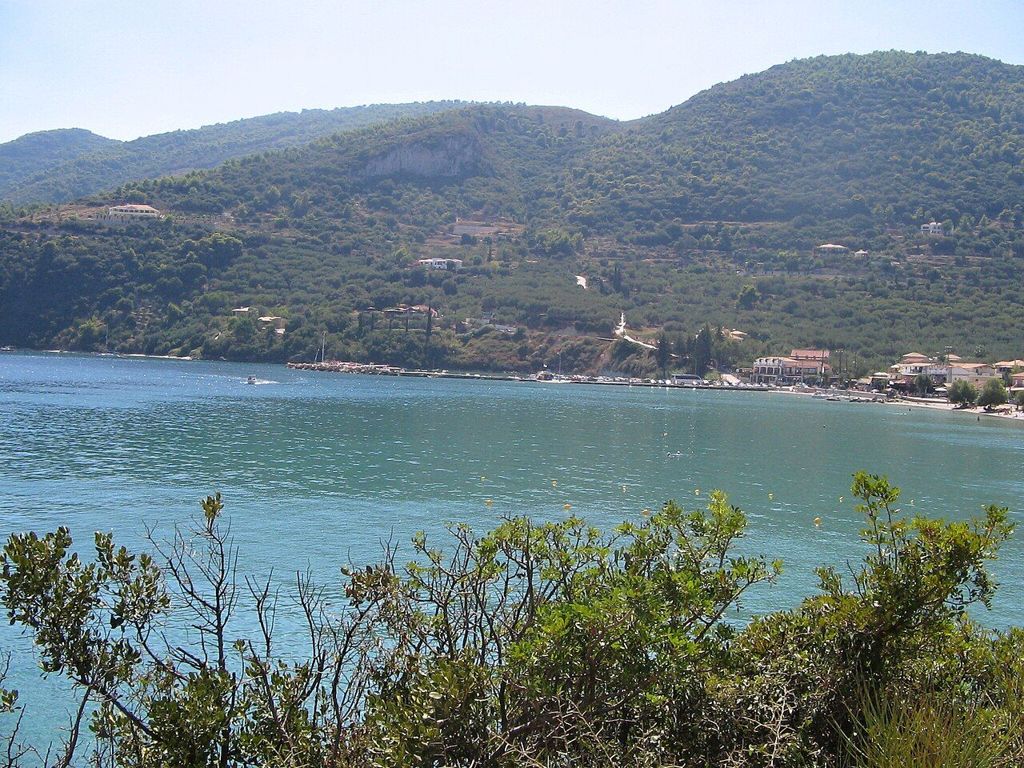
Keri village and Limni Keriou
The village of Keri sits on the hillside above the bay, with stone houses, narrow lanes and the church of Panagia Keriotissa. It survived the 1953 earthquake better than many places on the island, and some older buildings remain. Walk up through the lanes for views down over the bay towards Marathonisi.
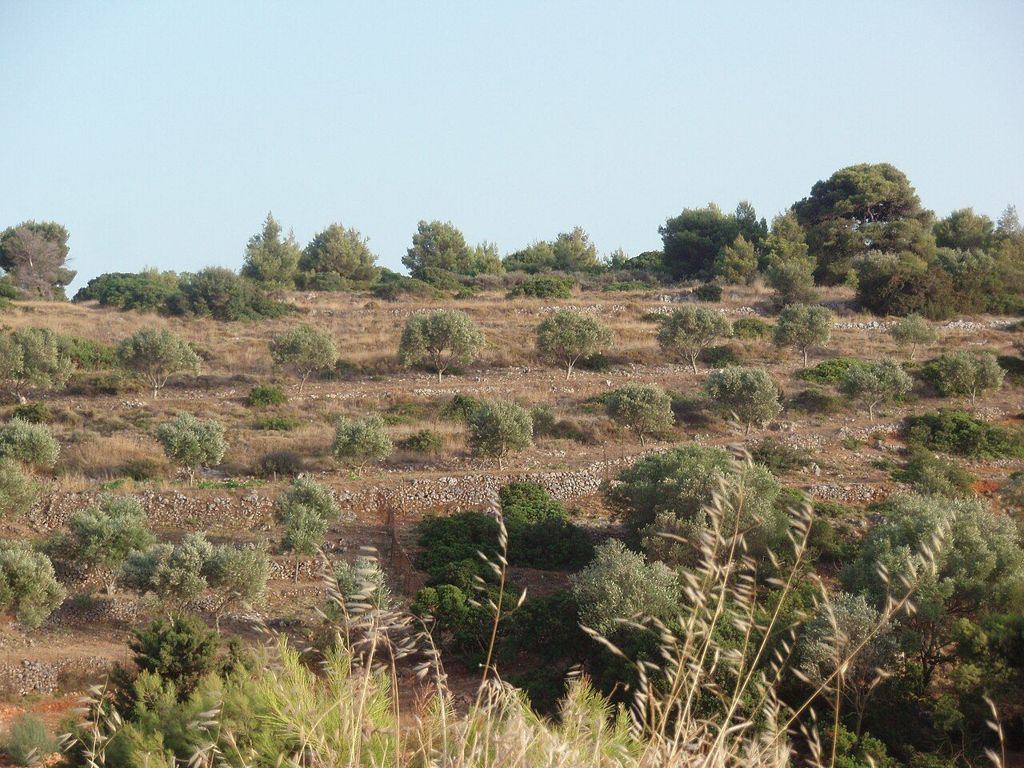
The land around the village is farmed with olives and vines, and the slopes are terraced with old stone walls. In spring the verges and fields are full of wild flowers, and the walk between the village and the cape is pleasant before the heat of summer sets in.
Down at the shore, Limni Keriou is a small harbour and beach at the western end of Laganas Bay. Small boats leave from here in summer for the sea caves along the Keri coast and for the islet of Marathonisi. These waters lie within the National Marine Park of Zakynthos, so boats must keep to slow speeds and respect the protected zones; the current rules change from season to season, so check before you go.
Combining Keri with the rest of the island
Keri is a natural end point for a day on the south coast. Start in the morning at the nesting beach of Gerakas, cross the bay, and finish at the lighthouse for sunset. For the turtles at sea and the rules on boats, our guide to Marathonisi and Laganas Bay explains the protected zones.
The cliffs that begin at Keri run north along the whole west coast, reaching their most famous point at the Shipwreck cove of Navagio. Both views are best enjoyed from a safe distance back from the edge.