Gerakas and the loggerhead nesting beach
At the far tip of the Vasilikos peninsula, a long curve of sand is shared between summer swimmers and nesting loggerhead turtles. The rules are simple, and they matter.
| Best months | May, June, September |
|---|---|
| Getting there | Road south along the Vasilikos peninsula |
| Bring | Towel, shade hat, water, a bag for rubbish |
| Beach rule | Daytime only; stay out of marked nest zones; keep umbrellas and loungers in the permitted strip near the water. |
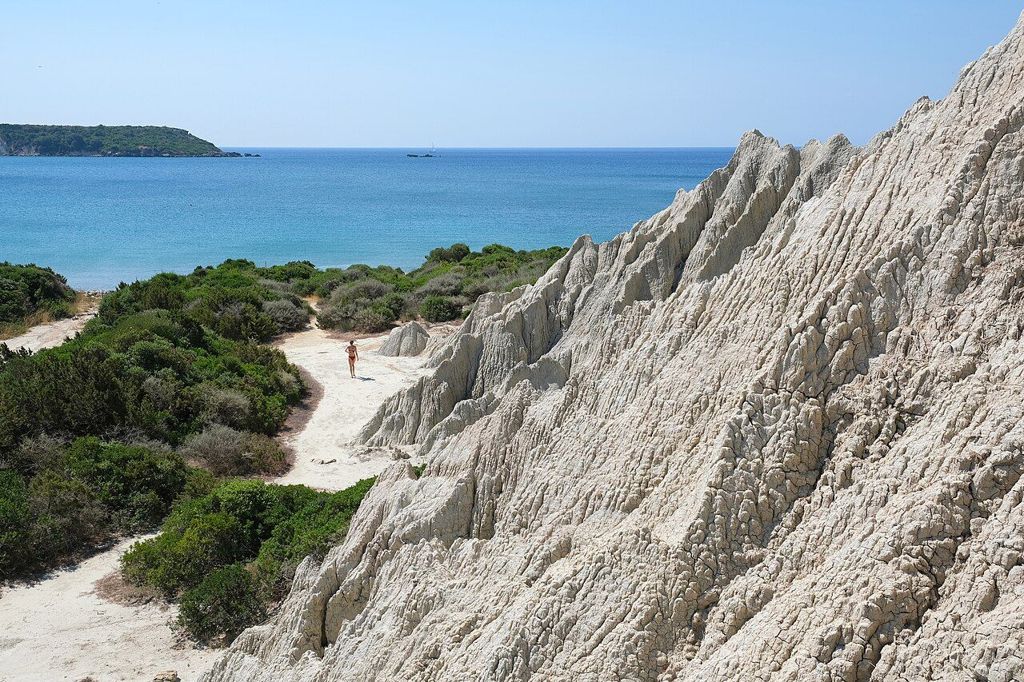
Gerakas sits at the eastern end of the Vasilikos peninsula, the long arm of land that closes the south-east corner of Zakynthos. The beach is a wide arc of fine sand backed by low dunes and by pale, deeply furrowed cliffs. It is also one of the most important nesting beaches for the loggerhead turtle in the Mediterranean, and it lies inside the National Marine Park of Zakynthos. That double life shapes everything about a day here.
This guide explains what the park asks of you, how the beach changes from morning to evening, and how to enjoy the cliffs and the water without harming the reason the place is protected.
A beach that belongs to the turtles at night
The loggerhead turtle, Caretta caretta, spends most of its life at sea. Females come ashore only to lay eggs, and the beaches around Laganas Bay, Gerakas among them, are among the busiest nesting sites in Greece. Nesting season runs roughly from late spring into summer. A female crawls up the sand at night, digs a chamber with her rear flippers, lays a clutch of eggs, covers it and returns to the water. The eggs incubate in the warm sand for around two months, and the hatchlings dig out, usually after dark, and head for the brightest horizon, which should be the sea.
Because of this, Gerakas is a daytime beach. It closes to visitors from evening until morning during the season. The exact hours are set by the park and can change, so check the signs at the entrance or ask at the park's information point before you go. Do not plan a sunset picnic, a night swim or a beach party here. Lights, noise and footprints on the sand at night are exactly what the rules are designed to prevent.
The marine park rules in plain terms
The National Marine Park of Zakynthos was set up to protect the nesting beaches and the waters of Laganas Bay. On land, the rules at Gerakas come down to a few habits:
- Use the beach in daylight only, within the hours posted at the entrance.
- Keep out of areas marked as nest zones. Nests are often protected with small cages or marked with sticks and tape. Do not touch them or move them.
- Keep umbrellas and loungers to the strip set aside for them, close to the water. Umbrella poles driven into the back of the beach can pierce nests.
- Do not dig deep holes or build sand structures that you leave behind. Hatchlings can fall into holes and get trapped.
- Take everything home with you, including food scraps and cigarette ends.
- No vehicles, horses, dogs off the lead or fires on the sand.
Rules are reviewed from season to season, and fines exist for breaking them. Read the boards at the beach entrance each time, since details can change, and check before you go.
The clay cliffs
The cliffs that back Gerakas are as much a reason to come as the sand. They are made of soft, pale clay and marl, cut by rain into ribs, gullies and sharp crests. In the morning they look almost white; late in the afternoon they turn warm and sandy. Some visitors smear the wet clay on their skin at the foot of the cliffs, but the faces themselves are fragile.
Further along: Marathonisi and Laganas Bay
Do not climb the slopes or carve into them. The clay crumbles easily, edges can collapse, and every scramble speeds up the erosion. Keep to the paths through the scrub and the open sand, and look at the cliffs from below or from the water. The best light for photographs is early, before the beach fills, when the low sun picks out every groove.
Swimming and the water
The sea at Gerakas shelves gently over sand, and on calm days the water is clear and shallow for a long way out. That makes it good for children and for slow swimmers. Turtles feed and rest in the waters of the bay, and you may see one surface for air some distance from shore. If you do, stay back, do not chase it, do not touch it and do not offer food. A turtle that is crowded can be stressed, and boats and swimmers that follow turtles are one of the main problems the park tries to stop.
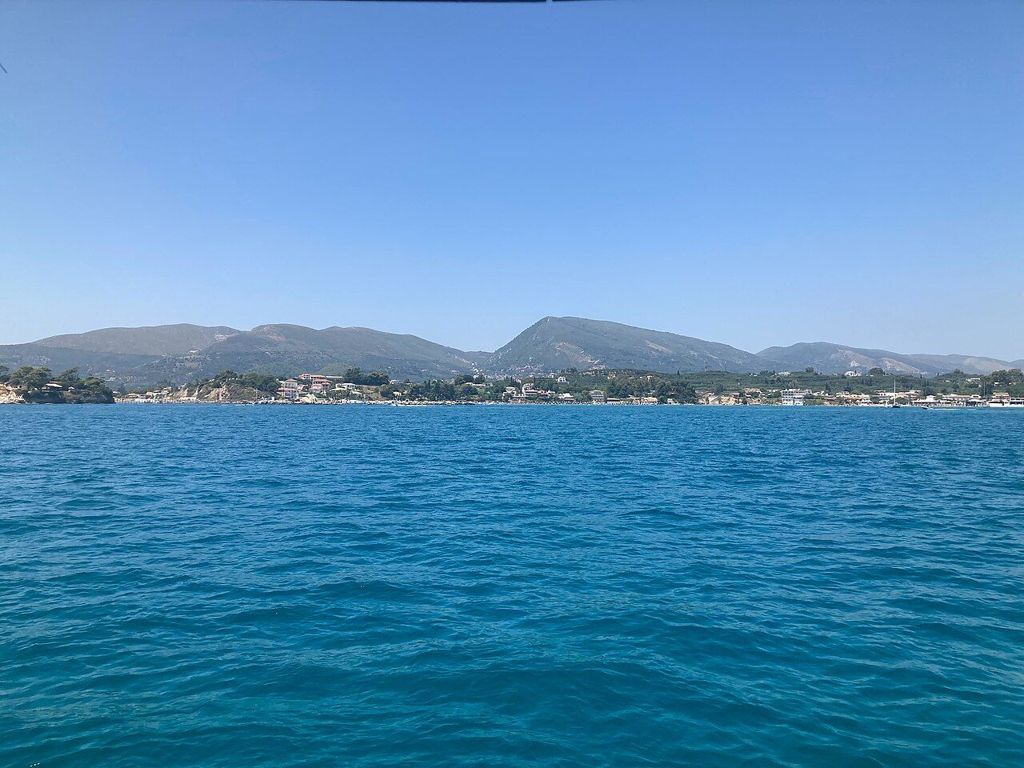
From the water you can look west across Laganas Bay towards the islet of Marathonisi and the cliffs near Keri. If the turtle story interests you, our guide to Marathonisi and Laganas Bay covers the protected zones at sea and the speed limits that apply to boats there.
When to go and how to plan the day
Late May and June bring warm water, long days and the start of nesting. September is often the calmest month for a visit, with the sea still warm and hatchlings emerging from the last nests. July and August are hot and busy, and the beach fills by late morning. Spring and autumn days are pleasant for walking the peninsula even if you do not swim.
Arrive early. Shade is limited, so bring a hat and plenty of water. The walk down from the road is short but sandy and can be hot in the middle of the day. There are seasonal facilities near the entrance, but opening times vary, so do not count on them.
Getting there and moving on
Gerakas lies at the end of the road that runs south along the Vasilikos peninsula from the direction of Zakynthos town. The drive is easy, and there is parking near the top of the beach. Local buses serve the peninsula in summer, but timetables change from year to year, so check before you go. Taxis are another option.
Combine a morning at Gerakas with an afternoon in Zakynthos town, rebuilt after the 1953 earthquake, or save a separate day for the west coast and the view down to the wreck at Navagio from the cliff top. Whatever you choose, leave Gerakas as you found it: smooth sand, quiet dunes and the nests untouched for the night.