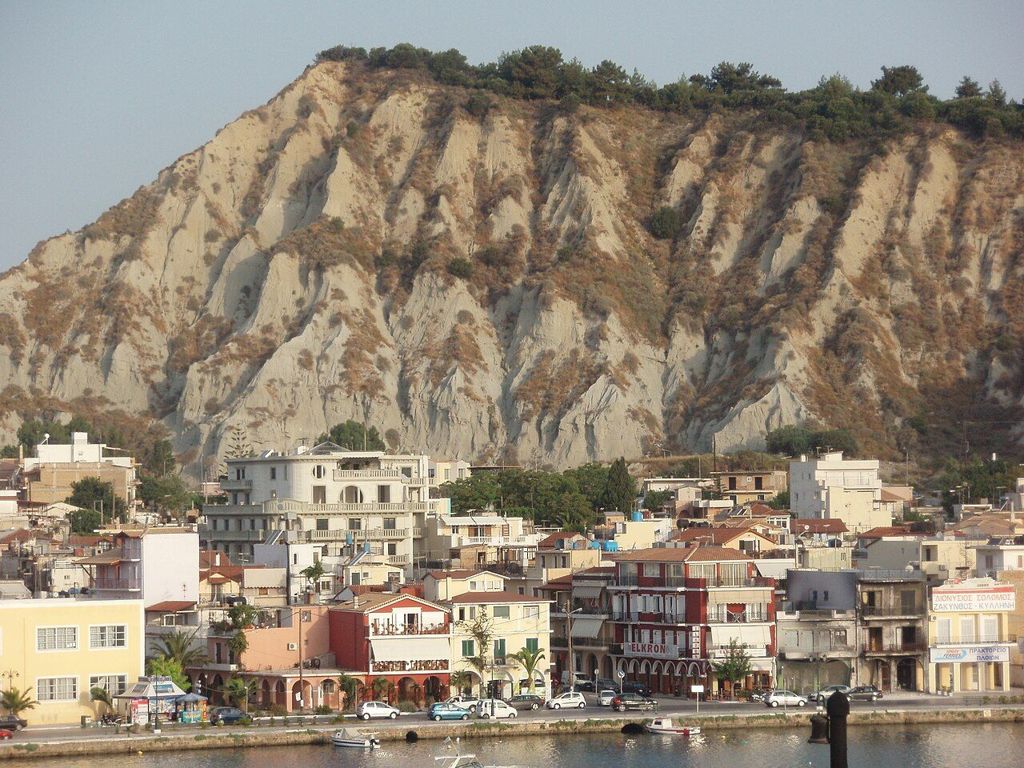
Zakynthos town after the 1953 earthquake
The island's capital was almost entirely destroyed in 1953 and rebuilt with arcades and squares that recall the old Venetian town. Walk it slowly, from the waterfront to the hill above.
| Best months | April, May, September, October |
|---|---|
| Getting there | On foot from the harbour or bus station |
| Bring | Comfortable shoes, shoulder cover for churches |
| Beach rule | Cover shoulders and knees in churches; keep voices low during services and ask before photographing inside. |
Zakynthos town, often called Zante, stretches along a wide bay on the east coast of the island, with the harbour in front and a green hill behind. For centuries it was a prosperous trading town under Venetian rule, full of mansions, churches and arcaded streets, and it was known in the Ionian Sea for its music, poetry and painting. Then, in August 1953, a series of strong earthquakes struck the Ionian islands. In Zakynthos the shaking was followed by fires, and almost the whole town was destroyed.
What you see today is a town rebuilt after that disaster. The planners kept the old street pattern in places and brought back the arcades, wide squares and pastel facades of the Venetian period, but in reinforced concrete and with lower buildings. The result is a calm, orderly town that rewards an unhurried walk.
The 1953 earthquake and the rebuilding
The 1953 earthquakes hit Kefalonia, Ithaca and Zakynthos within a few days. In Zakynthos town, collapsed buildings and the fires that followed left only a handful of structures standing. Many people left the island in the years after, and the rebuilding took a long time.
The new town was laid out with arcades along the main streets, giving shade in summer and shelter in winter, and with low buildings designed to resist future earthquakes. Some churches and public buildings were reconstructed on their original sites using surviving stones and plans. Walking the streets, you notice the uniform height of the blocks and the long, straight lines of the arcades, a sign of how much was rebuilt at once.
The main street running parallel to the waterfront is lined with these arcades for much of its length, and it is the best place to feel the rhythm of the rebuilt town: shaded walkways, shopfronts set back behind columns, and side streets opening towards the sea.
Solomos Square and the waterfront
Solomos Square opens onto the harbour at the northern end of the waterfront. It is a broad, paved space lined with palm trees, with arcaded buildings on two sides and the sea on the third. A statue of the poet Dionysios Solomos stands in the middle.
On the square, the Byzantine Museum displays icons and church art rescued from churches across the island, including many saved from the ruins of 1953. Opening hours move with the season here; confirm them on the day. At the seaward corner, the small church of Agios Nikolaos tou Molou was rebuilt after the earthquake using its original stones.
From the square, the long waterfront promenade runs south past the harbour. Evenings here are busy with families out walking, especially in summer.
Further along: Navagio from the cliff top
Dionysios Solomos, the national poet
Dionysios Solomos was born on Zakynthos in 1798 and is regarded as the national poet of Greece. His long poem, the Hymn to Liberty, was written during the Greek War of Independence, and its opening stanzas became the words of the Greek national anthem. He wrote in the spoken Greek of his day rather than the formal language of scholars, which made his work widely read and influential.
The Museum of Solomos and Eminent Zakynthians, on Agios Markos Square a short walk from the waterfront, is devoted to him and to other writers, artists and public figures from the island. The poet Andreas Kalvos, also from Zakynthos, is remembered there too. Check opening times before you go.
The church of Agios Dionysios
At the southern end of the harbour stands the church of Agios Dionysios, dedicated to the patron saint of the island. Its tall bell tower, modelled on Venetian towers, is visible from far along the waterfront. The church was one of the few large buildings to survive the 1953 earthquake, and it holds the relics of the saint in a silver casket.
The interior is richly decorated with paintings and silverwork. Two feasts of the saint, in August and in December, bring processions through the town. This is a working church: cover your shoulders and knees, speak quietly, and ask before taking photographs inside, especially during services.
Visit early in the morning or in the late afternoon if you want a quieter moment inside. Around the feast days the church and the streets nearby are crowded with worshippers, many of them from across the island.
Bochali, the castle and the old Jewish cemetery
Above the town, the hill of Bochali is crowned by the walls of the Venetian castle. The road up winds through a small village with views back over the rooftops, the harbour and, on clear days, the coast of the Peloponnese. The castle grounds are a quiet place of pines and ruined walls; opening hours vary, so check before you go.
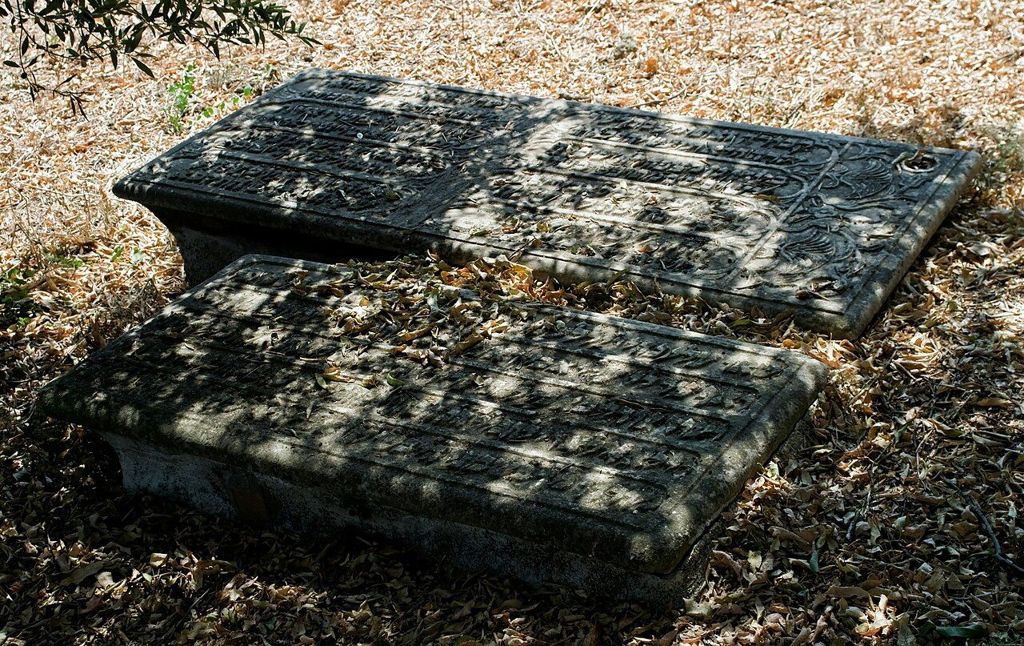
The town once had a Jewish community with its own quarter and synagogue. During the Second World War, the island's Jews were not handed over to the occupying forces, and the community survived; the mayor and the metropolitan bishop of the time are remembered for their part in this. The synagogue was lost in 1953, but the old Jewish cemetery near the town survives, with carved tombstones under the trees.
Getting around and moving on
The town centre is compact and flat along the waterfront, so walking is the easiest way to see it. The bus station has services to many parts of the island in summer, though timetables change, so check before you go. Ferries from the harbour link Zakynthos with the mainland port of Kyllini.
From town, the south-east coast is a short drive away, with the nesting beach at Gerakas at the end of the Vasilikos peninsula. For the turtles at sea and the protected zones, read our guide to Marathonisi and Laganas Bay. And for the island's most famous view, set aside a day for Navagio from the cliff top.