Marathonisi and Laganas Bay
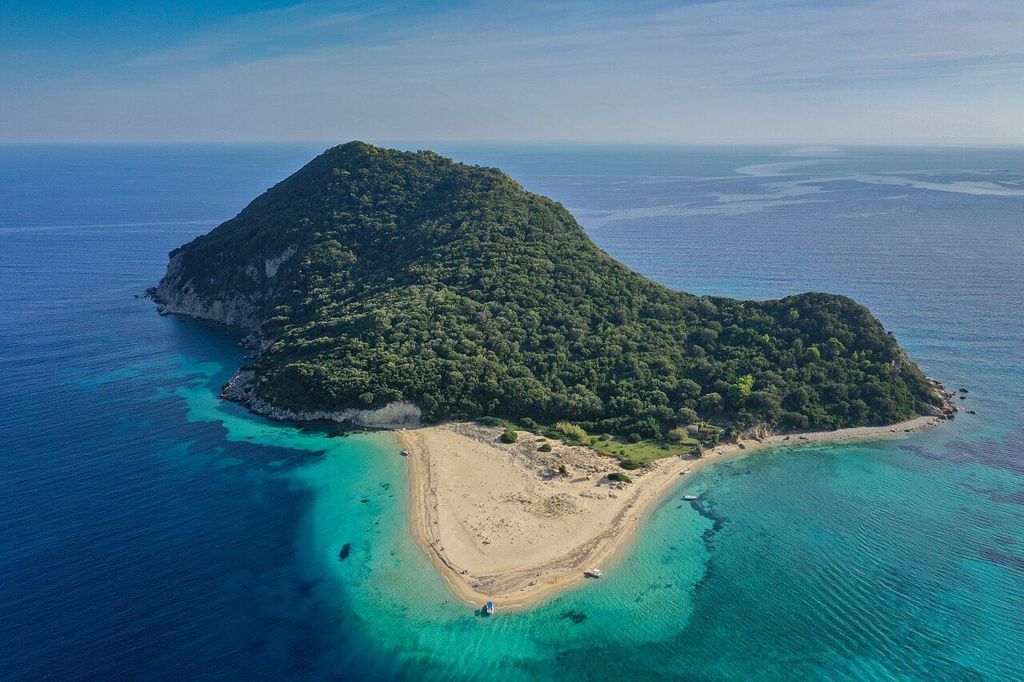
Seen from above, the small wooded island in Laganas Bay looks like a turtle swimming south. The real turtles live in the water around it, and the bay has rules to keep them safe.
| Best months | May, June, September |
|---|---|
| Getting there | Small boat from the south coast |
| Bring | Hat, water, reef-safe sunscreen, snorkel mask |
| Beach rule | Boats slow down in the bay; no anchoring in protected waters; daytime visits only to the nesting beach. |
Laganas Bay is the wide, shallow bay that cuts into the south coast of Zakynthos between the Vasilikos peninsula in the east and the cliffs of Keri in the west. It is the heart of the National Marine Park of Zakynthos, created to protect the loggerhead turtles that mate in the bay and nest on its beaches. In the western part of the bay lies Marathonisi, a small, steep island covered in green scrub and pine, with a strip of pale sand at one end.
From the air, the island's rounded hill and the long sandy spit make a shape that looks remarkably like a turtle with its head pointed out to sea. The resemblance is part of its fame, but the real story is in the water.
The turtle-shaped island
Marathonisi is uninhabited. Its slopes are covered in dense Mediterranean shrubs, and its shores alternate between pale cliffs, rock shelves and short beaches. The largest beach, on the sandy spit, is a nesting beach for loggerhead turtles and is protected in the same way as the beaches on the main island. The name is usually explained as coming from fennel, marathos in Greek, which grows wild on the island.
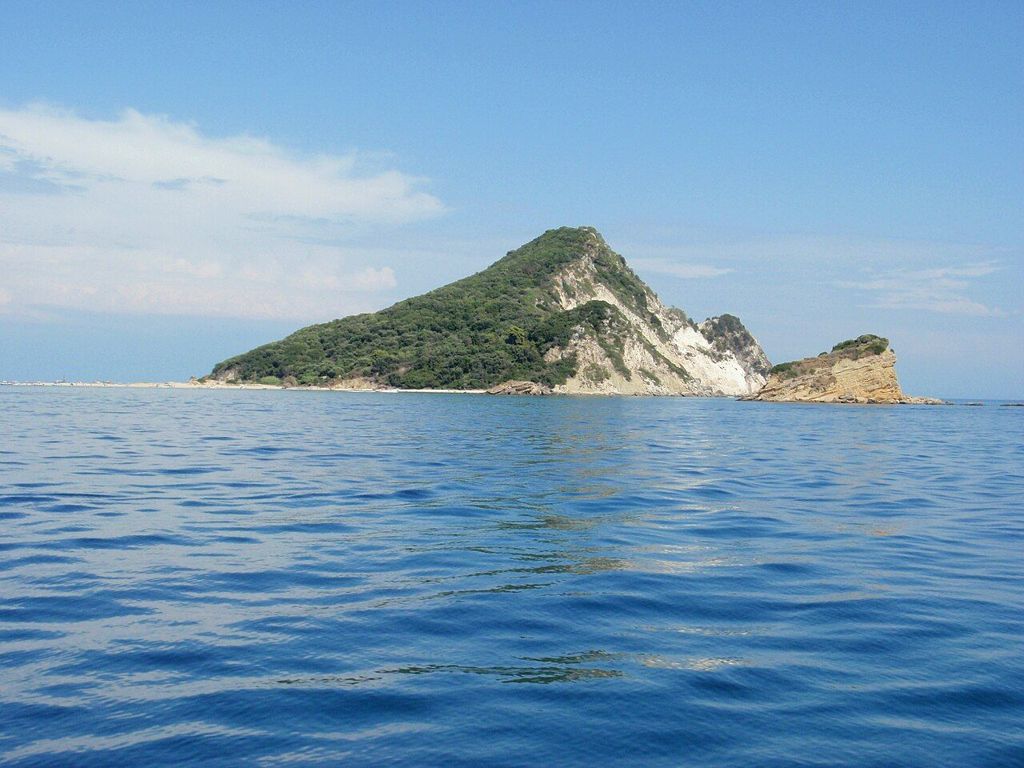
Small caves and arches line parts of the shore. Boats often stop near them so that passengers can swim in the clear water, and the colours change from deep blue to pale turquoise over the sand.
Why the bay is protected
The loggerhead, Caretta caretta, is a large sea turtle found across the Mediterranean. Laganas Bay is one of the most important places for the species in the region. Adults gather in the warm, shallow water in spring to mate; females then come ashore to lay eggs on the bay's beaches from roughly late spring into summer. Between nesting trips they rest on the sea floor in the bay. Hatchlings that emerge from the nests late in the summer have to cross the same waters to reach the open sea.
The bay is also busy with summer traffic, from swimmers and pedalos to excursion boats and private craft. A fast boat cannot see a turtle resting just below the surface, and propeller strikes are a real danger. That is why the park divides the bay into zones with different rules.
Further along: Gerakas and the loggerhead nesting beach
Speed, anchoring and the protected zones
The park's rules at sea are reviewed regularly, so treat the following as general guidance and check the current version before you go. In broad terms, parts of the bay are closed to boats altogether, especially close to the most sensitive nesting beaches. Across much of the rest of the bay, boats must keep to a low speed limit and may not anchor. Fishing is restricted in the protected waters. Marker buoys show the limits of some zones.
- If you rent a small boat, ask for a map of the zones and keep to the speed limit inside the bay.
- Do not anchor in protected waters. Anchors damage the sea floor and the seagrass where turtles rest.
- If a turtle surfaces near your boat, cut the engine or slow right down and let it move away.
- Never follow, feed, touch or ride a turtle. Boats that crowd turtles for passengers to watch are part of the problem the park is trying to solve.
When choosing an excursion, look for operators that respect these rules: slow speeds, a short stop at a distance from any turtle and no feeding. Licences and conditions are set by the authorities and can change.
Visiting the island
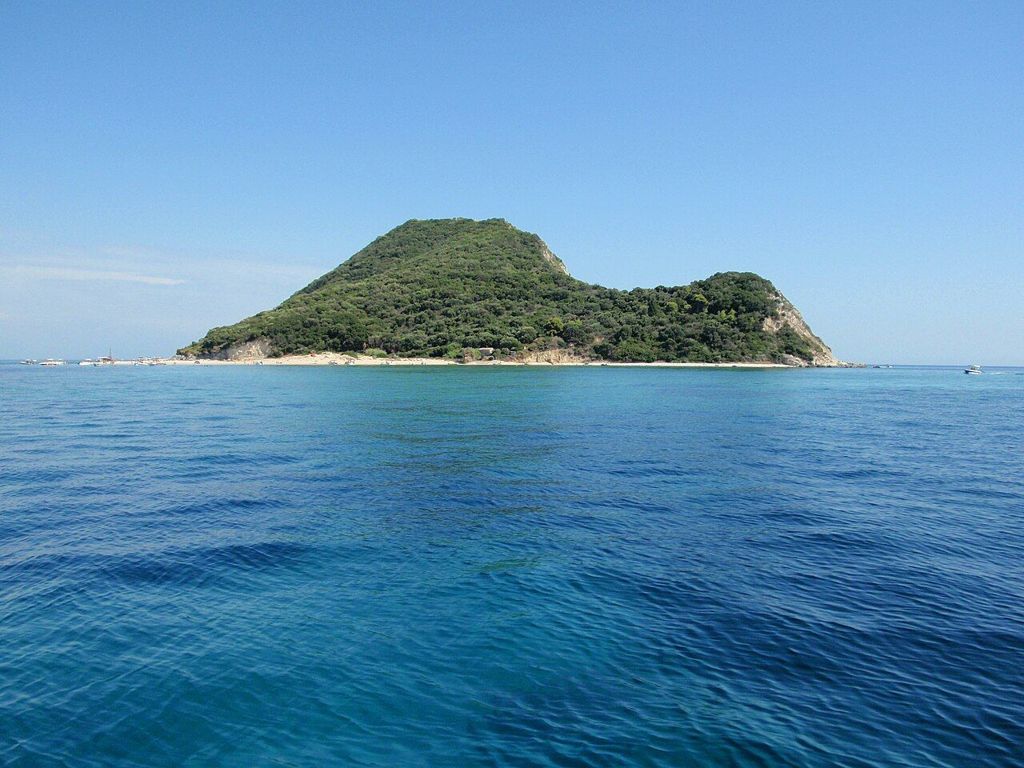
Small boats run to Marathonisi in summer from points on the bay, including the harbour at Limni Keriou in the west. Some leave you on the beach for a short swim; others circle the island and stop near the caves. Self-drive boats that do not need a full licence are also available in the area, with limits on engine size that change from time to time; ask about the rules when you hire.
On the beach, the same habits apply as on the nesting beaches of the main island. Stay out of marked nest areas, do not dig, take your rubbish with you and leave in good time. The beach is for daytime visits only. Bring water and shade, since there is no service on the island.
Snorkelling around the rocks at the edge of the beach can be rewarding on calm days, with small fish over the sand and seagrass. Keep a respectful distance from any turtle you meet underwater, and surface quietly.
The rest of Laganas Bay
Marathonisi is not the only islet in the bay. Pelouzo, a smaller, flatter island, lies further east. The shoreline of the bay runs from the sheltered coves of the Vasilikos peninsula, with the nesting beach at Gerakas at its tip, through long sandy stretches in the middle to the high cliffs near Keri in the west. On calm days the whole bay can feel like a lake.
For the land side of the turtle story, read our guide to Gerakas and the loggerhead nesting beach. For a view over the western end of the bay and the sea stacks beyond it, head up to Keri's cliffs and lighthouse.
When to go
May and June bring calm water and active turtles, and September is quieter, with warm seas and hatchlings heading out from the last nests. July and August are the busiest months on the water. Morning is usually the calmest time of day in the bay; wind often picks up in the afternoon. If you also plan a boat to the far north of the island, our guide to the Blue Caves at Cape Skinari has notes on sea conditions there.